
MERCURY TRANSIT – come and see it with us in Kendal!
Reply
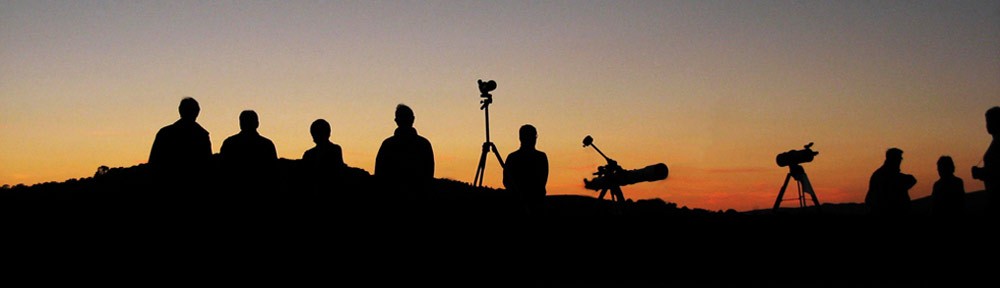
On May 9th Mercury will appear to move across the face of the Sun – an event astronomers call a “transit” – and we will be holding observing events here in Kendal, both to watch it ourselves and to let other people see it safely.
Because Mercury will just look like a tiny black dot on the face of the Sun seeing it will require great care and special equipment not generally available to the public. At our events we will be following the transit by viewing images of the Sun projected by telescopes onto screens, or observing it directly through special “solar telescopes” or telescopes fitted with special solar filters.
DO NOT LOOK AT THE SUN DIRECTLY WITHOUT SPECIAL EQUIPMENT DURING THE TRANSIT OR YOU COULD DAMAGE YOUR EYES OR EVEN BLIND YOURSELF.
We will star our Transit watching in Abbot Hall Park, from around 11.30am, 45 minutes or so before the Transit actually begins.

At 12.12 Mercury’s disc will touch the edge of the Sun, and three minutes later Mercury will be silhouetted against the disc, looking like a tiny black dot on it. The Transit will be at its maximum at just after 3.30pm, when Mercury will be not far from the centre of the Sun’s disc.
 At 5.00 some of us will move up to Kendal Castle to watch the closing stages of the Transit, the end of which will not be visible from Abbot Hall Park because of trees and buildings. Up at the Castle we will have a fantastic view of the end of the Transit because there will be no such obstructions.

At 19.37, with the Sun now low in the western sky, Mercury will start to move off the edge of the Sun, and at 19.40 the Transit will end as Mercury moves completely off the Sun’s disc, just an hour or so before sunset.
We hope lots of people will come and watch this exciting and rare event with us in Kendal. Cross your fingers for clear skies!
Now, as usual, NO PROMISES but it ***might*** be worth keeping an eye on the northern sky after dark tonight, because there’s a chance we might be able to see the aurora tonight. Absolutely no guarantees, I’m not saying it WILL happen, just giving everyone a heads-up that it’s a possibility. So, after dark, look north, and if you see a green glow, or even pale pink/violet rays, get to a better observing place if you can.
We were lucky enough to see the big “Mothers Day Aurora” from the Kielder starcamp, and I’ll show photos at the next meeting. Just be aware tho, that wen it comes to displays of the northern lights the camera does lie in fact it lies through its back teeth, exaggerating and enhancing subtle shades and hues to make even a modest display look like a drug-induced psychedelic hallucination. This will show you what my camera picked up on Saturday night, compared to what it actually looked like to the naked eye…

And here you can see, from L to R, camera view, processed view and naked eye…

Good luck everyone!
Stu
Not sure whether this was worth the effort, from a photographic point of view, but it was still a glorious naked-eye sight from the trig point on The Helm yesterday morning just before 7 o’clock. Mercury is there too, either behind that CIC (“curiously immobile cloud”) below and to the left of Venus, or lost in the sunlight. Binoculars might have tracked it down, but scanning the eastern horizon with binoculars at sunrise is a mug’s game.
This is about 16 shots with a fixed 50mm lens, stitched together using a wonderful programme called PTGui.

Thanks to Simon for his organising efforts and perseverance with Kendal weather.
Grand night learning a number of member’s techniques very quickly:
ISS kindly flew over to to set the evening off.
Simon W’s easy magnitude benchmark for the evening: Polaris and the rest of Ursa Minor give you: two Mag 2’s, a 3 and a 5 (there are a few near fours – and a nearly six if viewing is that good as well). We’re seeing mag 5 naked eye.
We can now all find the Andromeda galaxy from either Cassiopeia of Pegasus (easy in binoculars, I say).
Graham’s colour index, blue Rigel to red Betelgeuse. We’re all on the look-out for a supernovae from a red giant like Beetlejuice or Aldebaran in the next 1,000 years. Sirius is white, so say most of us.
Ian showed us Uranus near the horizon through a telescope (findable in binoculars noticing that the scope was pointing above a white drainpipe).
Jupiter and its moons rose: a steady image, easy to follow with manual controls on the society’s scopes and more impressive with increasing power in other scopes. On the other hand, the Orion nebula is brighter and more impressive in binoculars – for me, personally.
Graham and Moira kept us informed with the constellation legends. Some of us are stuck in our ways though. Perseus is no warrior but a horse crossing the sky in the direction of all the other characters while Pegasus is just a big (Autumn) square. Taurus is a ‘V’ on its side – okay it’s got a tail.
With a bit of luck, Leo the Lion next month. That’s the backwards question mark although some members see a coat-hanger.
To all members…
Just a quick note with two reminders…
1. Tonight (Wed 10th) looks very promising for the first of Simon’s SKYWATCH events, so I hope lots of you will support it, and him after all his hard work, by going along. I’ll be stuck at work… typical… but there will be lots to see and do I’m sure. Full details on the special page on the blog, which you can reach via the tab at the top of this page…
2. It’s our latest MOONWATCH at the Brewery Arts Centre this coming Saturday (13th) night. Again, I’ll miss it cos I’ll be stuck at work (the phase and visibility of the Moon dictated the date) but if you can go along, PLEASE DO! We always get lots of people at our MoonWatch events now, and the more telescopes we have there the better. Starts at 6 goes on until whoever is there decides it’s time to wrap things up.
Thanks all.
StuA
Thanks to everyone who came along go our February meeting at Kendal Museum last night! It was a great evening – very busy, with lots discussed – and the triumphant debut of a new guest speaker too…
After our current Secretary gave an illustrated round-up of recent space and astronomy news – including the latest on Comet CATALINA, the 12th anniversary of the Opportunity rover’s landing on Mars and the possible discovery of a new planet out beyond Pluto – it was time for Simon White to outline his plans fir an observing evening later in the month (see the dedicated page for full details). Then, after the break upstairs, it was our AGM, which resulted in the re-election of existing Committee members, a change of Secretary and the addition of a new member to the Committee.
 To close the meeting, EAS member Moira Greenhalgh (shown above at last year’s solar eclipse) gave a brilliant talk in the planet Uranus and her fascination with it. This was Moira’s first talk to the Society, so she was understandably nervous about giving it, but she needn’t have worried – she had the room engrossed in her presentation right from the start, talking very personally about why she finds Uranus so interesting. Her talk was illustrated with some beautiful and striking pictures, and at the end the huge round of applause she received was very well deserved.
 (Pic: )
Many thanks to Moira for stepping up and giving us her talk – this is something we’re hoping more members will do this year, and although Moira will be a hard act to follow hopefully she will have inspired others to walk to the front of the room and tell us about their interests and activities.
Our next public observing event will be a MOONWATCH at the Brewery Arts Centre on Saturday February 13th…
 These events are really popular, and we regularly attract more than a hundred people to the Brewery to view the Moon through our telescopes. The MoonWatch events are free, and suitable for all the family – we even have stools so young ones (and short older ones!) can reach the eyepieces of the telescopes to enjoy the view!
This is how the Moon will look through our telescopes at the MoonWatch…
 At our February MoonWatch we will also try to show people the planet URANUS, which will quite close to the Moon in the sky on that evening…
 We might even be able to show people Comet CATALINA too…!
So, hopefully the sky will be clear on that night. If it is, come along to the Brewery and we’ll show you some beautiful sights through our telescopes.
If you watch the TV news at all you’ll know that there was a lot of fuss made on all channels last week about the “grand alignment of planets” visible in the morning sky at the moment. Lots of very impressive-looking computer graphics were shown in the reports, giving the impression that the pre-dawn eastern sky is ablaze with planets as bright as lanterns, all clustered closely together in a celestial spectacle to leave you gasping with wonder…
I wish!
Unfortunately the reality is rather different. Yes, there are five planets “on view” in the sky before dawn, but they certainly aren’t as eye-catching as the TV people suggested! Well, not all of them; two – Venus and Jupiter – are strikingly bright. However, two of the others – Mars and Saturn – look just like stars, and Mercury is so faint, and still so low as dawn approaches, that finding it before sunrise is a real challenge.
 But don’t let that reality check put you off! It’s still a fascinating and rare sight, so if you want to give it a go, you can find all the info toy need – including charts and observing tips – on our Secretary’s blog, here…